There are no items in your cart
Add More
Add More
| Item Details | Price | ||
|---|---|---|---|

Learn how banks calculate LCR and NSFR, measure interest rate risk in the banking book, apply RBI and BCBS guidelines, and use stress tests, contingency funding plans and ALCO oversight.
Trusted by leading banks, insurers and financial institutions
In today's volatile financial markets, poor liquidity planning or mismanagement of interest rate risk can lead to severe financial stress or even bank failure.
Understand core liquidity and IRRBB concepts.
Apply regulatory metrics like LCR and NSFR.
Strengthen Asset Liability Management (ALM) practices.
Course overview, curriculum, certification and fee in one document. Easy to share with your manager or L&D team.
7 modules cover liquidity and IRRBB foundations, LCR, NSFR, IRRBB measurement, RBI and BCBS guidelines, stress testing and ALM, and global case studies. Each module comes with a synopsis, and every lecture is followed by an MCQ.

Liquidity Risk – Funding vs. Market Liquidity
IRRBB – Earnings vs. Economic Value Perspectives
The Interlinkage – Liquidity Risk Meets IRRBB
Foundations of LCR – Purpose, Definition & Formula
High-Quality Liquid Assets (HQLA) & LCR Components
Stress Scenarios & Practical LCR Implementation
Introduction to NSFR – Concept & Rationale
NSFR Calculation & Balance Sheet Structure
Strategic Implications of NSFR for Banks
Foundations of IRRBB – Types & Sources of Risk
Measurement Approaches – EVE vs NII Perspective
Tools & Applications – Gap Analysis, Duration Models & Lessons
RBI IRRBB Guidelines (2023 Update)
BCBS Standards on IRRBB (2016 & Revisions)
Supervisory Expectations & Pillar 2 Treatment
Stress Testing Liquidity & Interest Rate Shocks
Contingency Funding Plans (CFPs) & Early Warning Indicators (EWIs)
Role of ALCO in Managing Liquidity & IRRBB
SVB Collapse (2023) – Duration Mismatch & Deposit Run
Deutsche Bank (2016) & Indian Banks Stress Test Insights
Best Practices & Simulation – JP Morgan & HSBC Dashboards
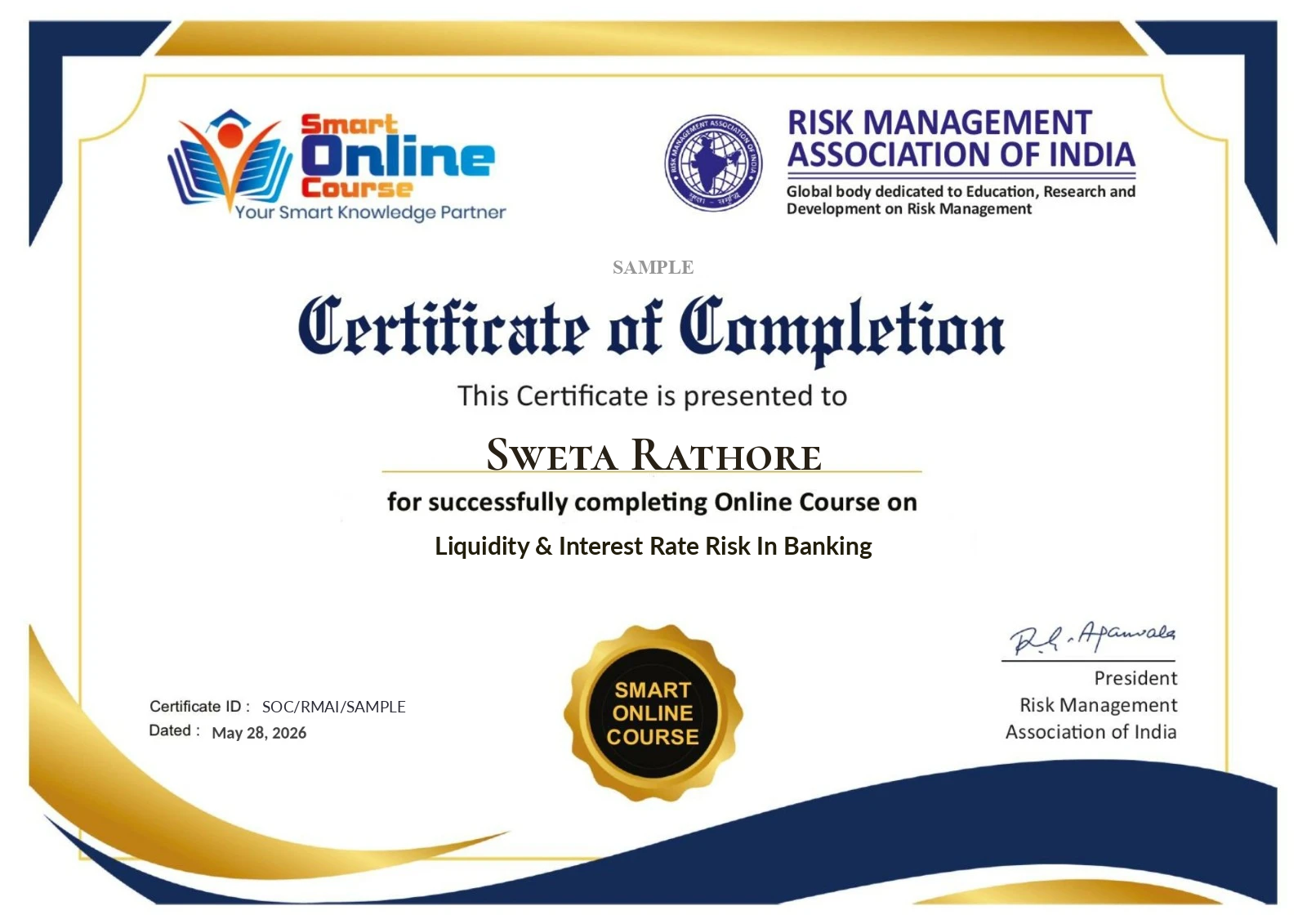
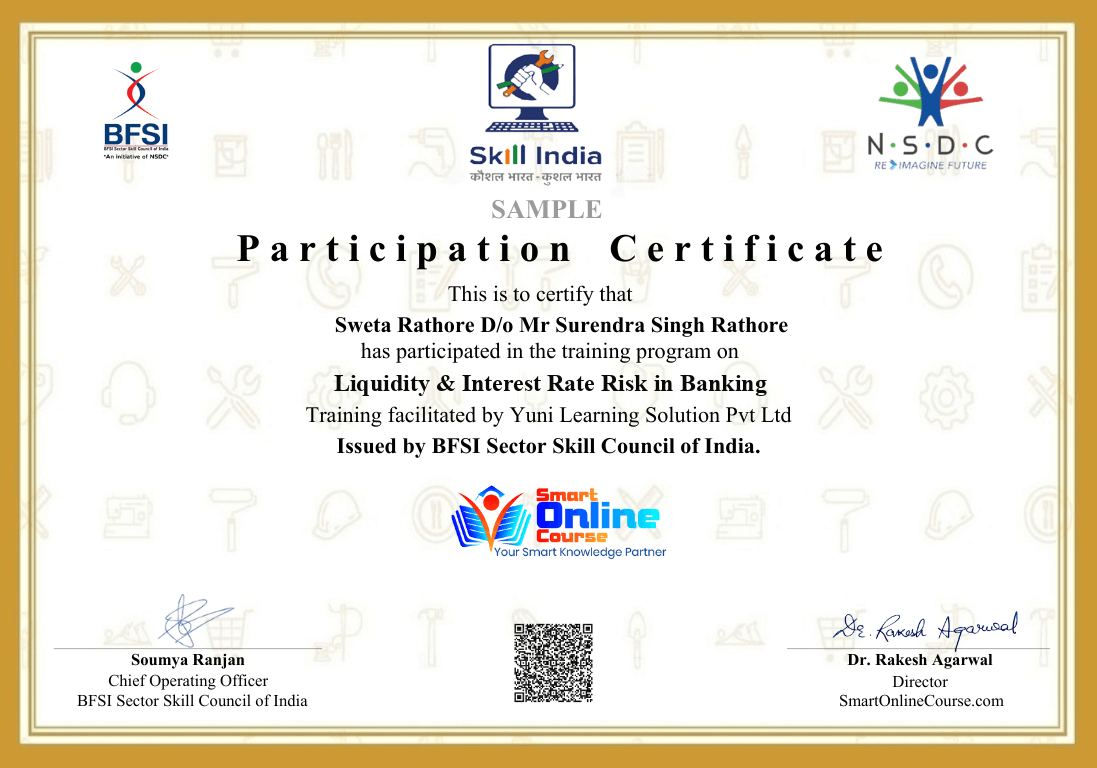
On completion you earn a Certificate of Completion from RMAI and Smart Online Course, and a Participation Certificate from the BFSI Sector Skill Council of India.
Sample certificates; yours will name this course. Issued subject to successful completion and applicable requirements.
Questions about the certificates or the assessment?
Ask a Course AdvisorThe Participation Certificate is issued by the BFSI Sector Skill Council of India, which operates within the skill-development ecosystem supported by NSDC under the Ministry of Skill Development and Entrepreneurship, Government of India.
The Certificate of Completion comes from the Risk Management Association of India, a not-for-profit body with over 32 years in risk education, research and professional development.
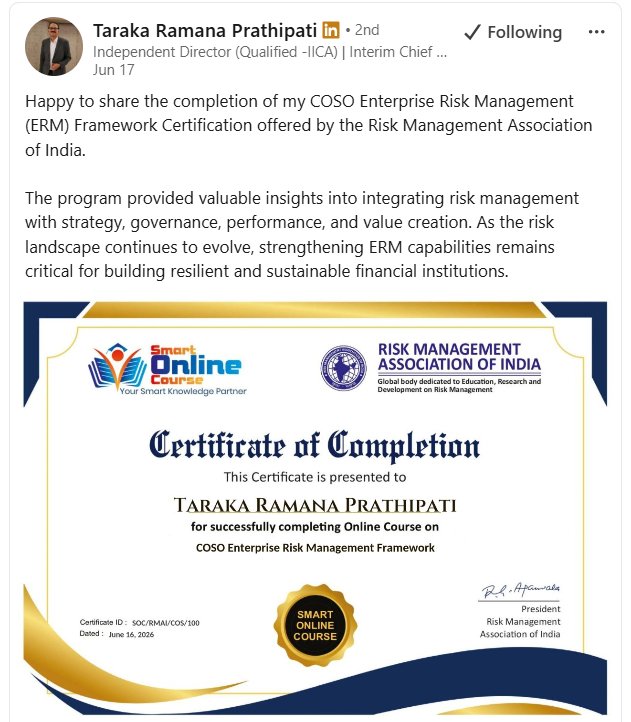
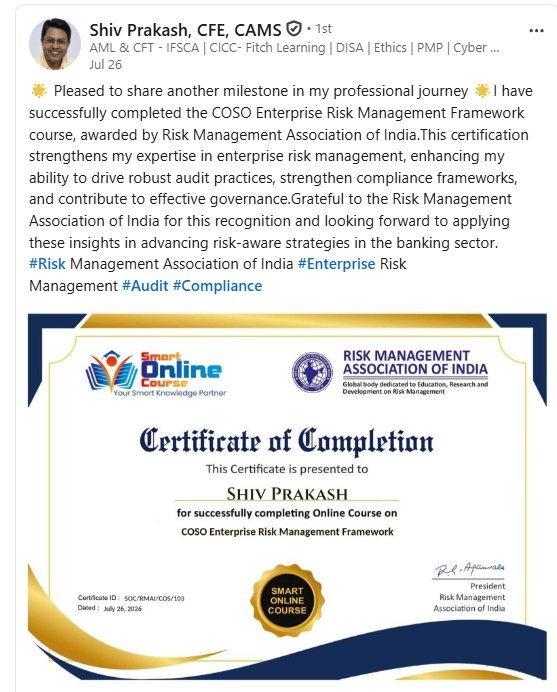
Professionals, including senior leaders at small finance banks, share their RMAI certificates on LinkedIn. Two of their posts are below.
“The program provided valuable insights into integrating risk management with strategy, governance, performance, and value creation.”
Taraka Ramana Prathipati
Independent Director (IICA qualified); Interim CRO, Equitas Small Finance Bank
COSO Enterprise Risk Management Framework“This certification strengthens my expertise in enterprise risk management, enhancing my ability to drive robust audit practices…”
Shiv Prakash
Zonal Manager, Internal Audit, Utkarsh Small Finance Bank
COSO Enterprise Risk Management FrameworkPosts by learners of other RMAI and Smart Online Course programmes, shared on LinkedIn. They are not endorsements by their employers; designations are as shown in the posts.
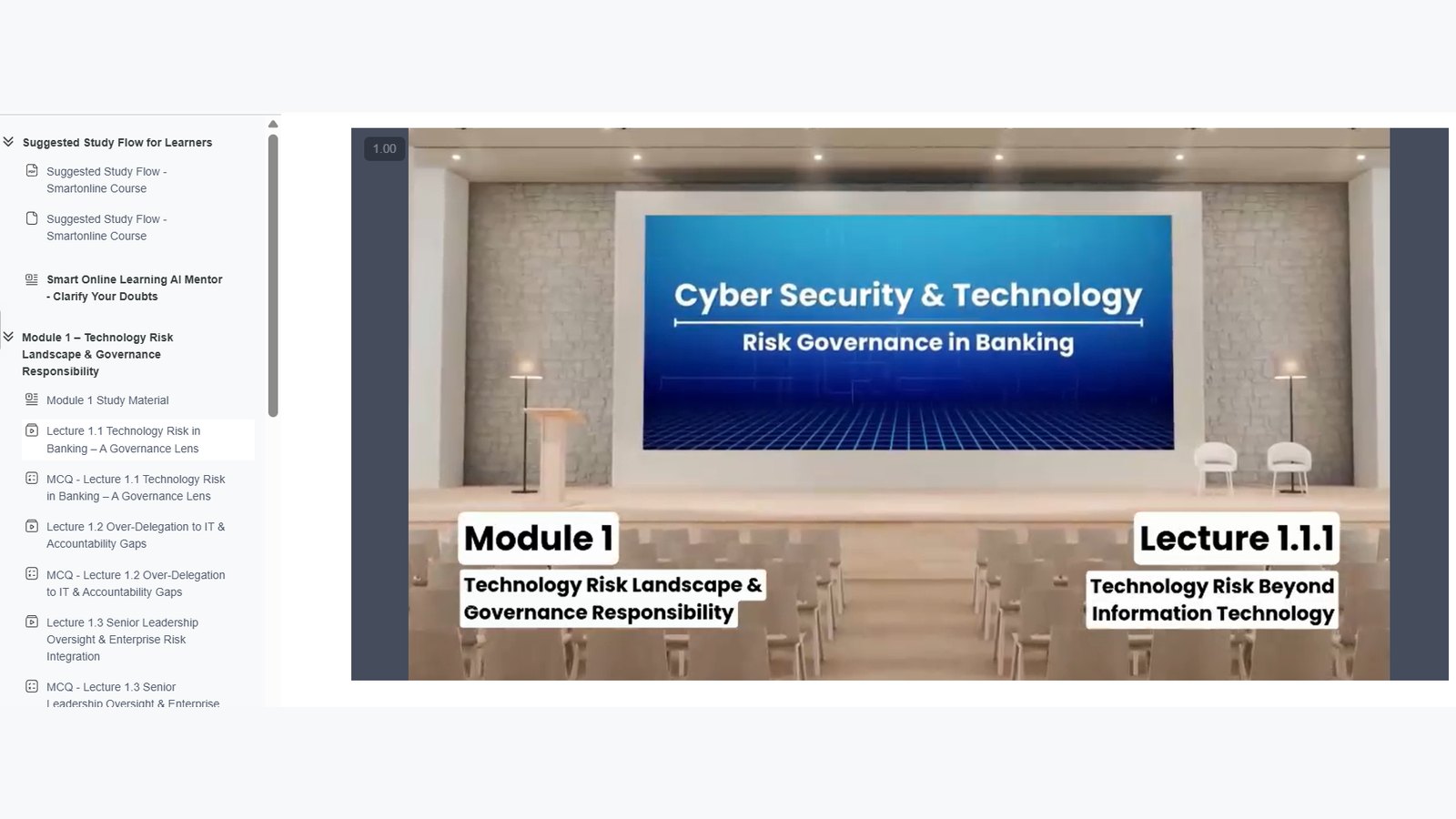
Video lectures, synopses, case studies, MCQs, an AI mentor and certification, all on the Smart Online Course platform, on any device.
21 lectures across 7 modules take you from liquidity and IRRBB basics to LCR, NSFR, regulation, stress testing and ALCO, to watch at your own pace.
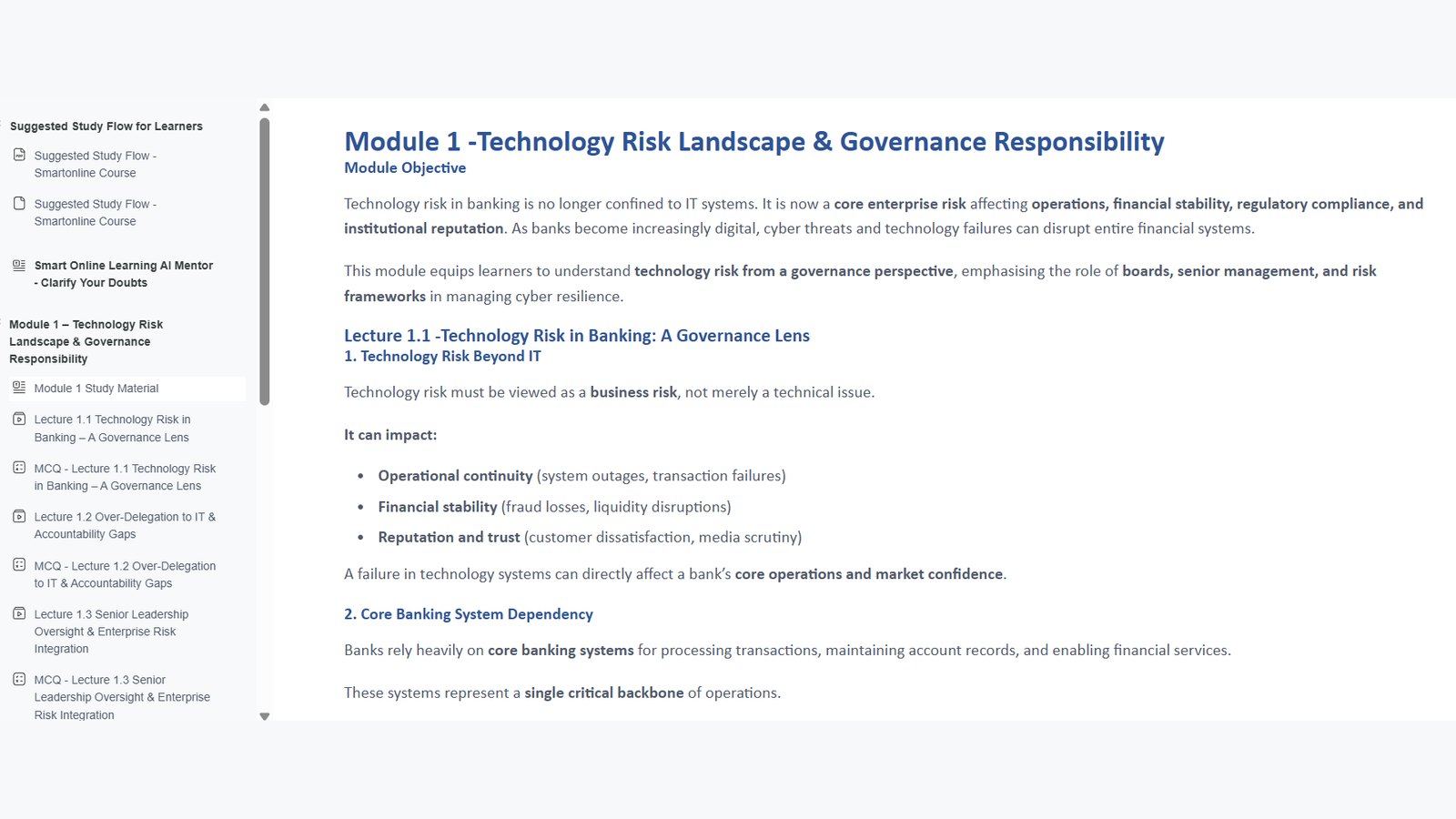
Each module comes with a synopsis to revise from.
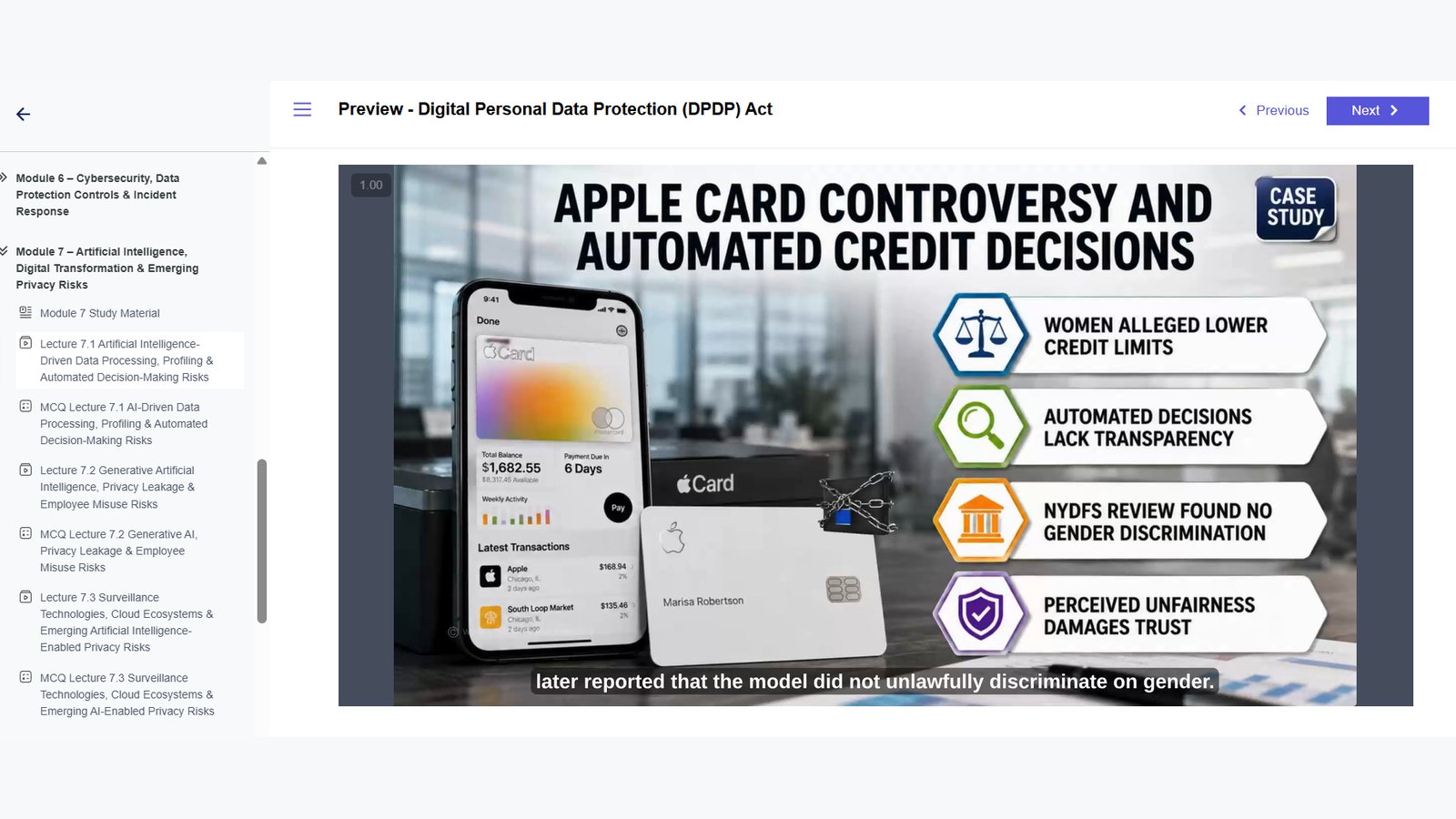
Study the SVB collapse, Deutsche Bank and Indian bank stress test insights, and JP Morgan and HSBC dashboards, then work through a case study on liquidity and interest rate risk.
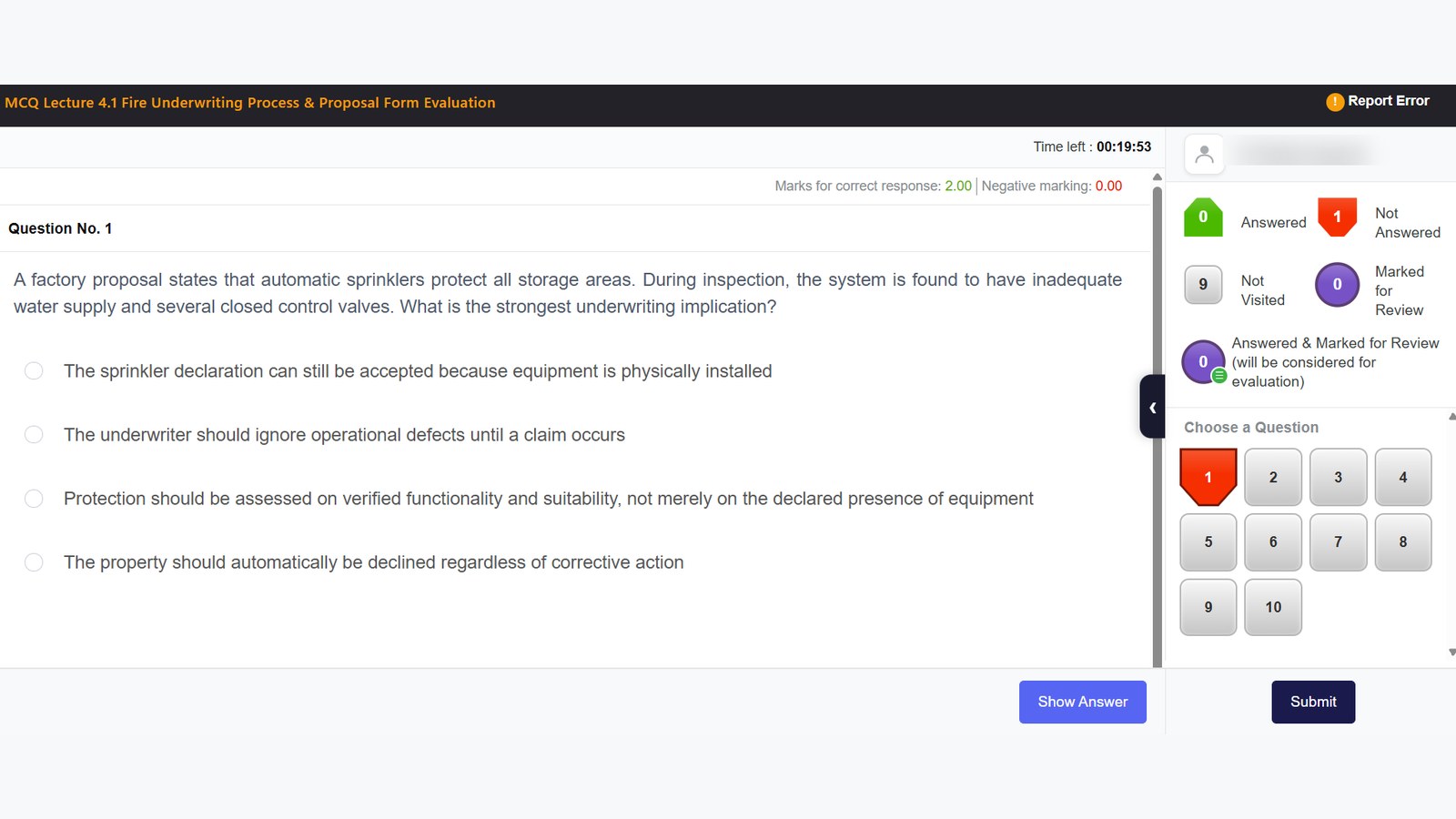
A short MCQ follows every lecture, and a final test closes the course.
Ask questions as you study and get explanations on the spot with the Smart Online Learning AI Mentor.
The course includes a 61-page e-book, a liquidity risk checklist, a case study, regulatory reading and the Banking Finance journal.
A 61-page e-book included in the course, which you can also download.
Tools and templates are samples for learning and illustration. Adapt them to your own organisation and the requirements that apply to it.
The course suits learners with a basic understanding of banking or finance. Prior risk management experience is not required.
Not sure the course fits your role?
Talk to a Course AdvisorNominate colleagues from your bank, NBFC, insurer or firm for Liquidity & Interest Rate Risk and get 10–25% off with bulk enrollment. We also offer custom course bundles mapped to each role in your team.
The discount depends on team size and is confirmed in your quote.
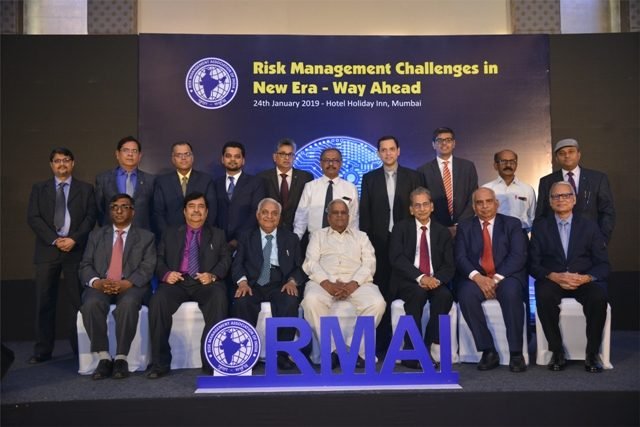
Faculty-led programmes run by RMAI and Smart Online Course for banks, insurers and institutions in India and abroad.
Risk Management Association of India. A not-for-profit body for risk education, research and professional development. Smart Online Course is its digital learning platform.
There are no batch dates. Enroll now and begin the first module straight away.
₹4,500₹10,00055% off
In India, per participant, including GST
Outside India$125$15017% off
Something else? Call or WhatsApp +91 8232083010.
Speak to a Course AdvisorThe course is created by the Risk Management Association of India (RMAI) and delivered on Smart Online Course, RMAI's digital learning platform. It is self-paced and pre-recorded.
You receive two certificates: a Certificate of Completion from RMAI, a not-for-profit professional body in risk management, and a Participation Certificate from the BFSI Sector Skill Council of India, which operates within the NSDC skill-development ecosystem under the Ministry of Skill Development and Entrepreneurship, Government of India. Many learners add their RMAI certificates to their LinkedIn profiles.
Yes. Preview the course to see the full curriculum, or download the brochure.
Prior risk management experience is not mandatory. The course suits learners with a basic understanding of banking or finance and explains concepts clearly while covering advanced topics. Professionals in banking or finance may find it especially relevant.
The course duration is 9 Hours. It is self-paced, so you can study around your work within the 120-day validity period.
You get immediate access after enrollment, and can revisit the course throughout the 120-day access period.
Yes. An MCQ follows every lecture, and a final test is included within the course. No separate external assessment is required.
You receive a synopsis with each module, a 61-page e-book, a checklist for liquidity risk management, a case study, reading resources and the Banking Finance monthly journal.
Yes. AI-driven support is available to assist your learning.
No. The course builds your skills and knowledge and does not guarantee a job.
Yes. For group or institutional enrollment, call or WhatsApp +91 8232083010, or email us at info@rmaindia.org.