There are no items in your cart
Add More
Add More
| Item Details | Price | ||
|---|---|---|---|

June 2, 2026
Artificial intelligence is rapidly transforming how organizations operate, make decisions, manage customers, and assess risk. From banking and insurance to healthcare and technology, AI systems are increasingly influencing critical business processes.
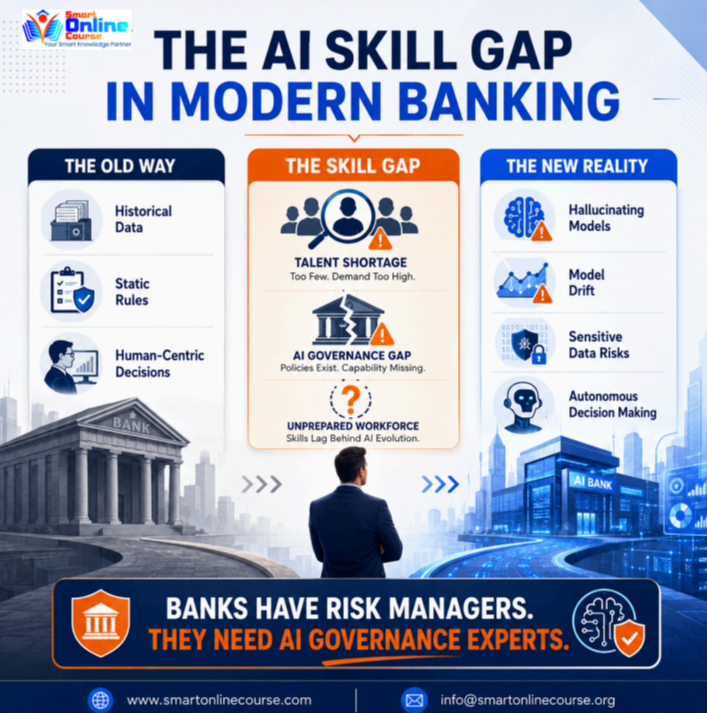
As AI adoption accelerates, organizations are discovering that traditional risk management frameworks alone are not enough to address emerging challenges such as algorithmic bias, explainability, model drift, data privacy concerns, and AI accountability.
This shift is creating a new and rapidly growing career domain: AI Governance.
For risk professionals, this represents both a challenge and an opportunity. The foundations of risk management remain highly valuable, but professionals must now expand their expertise to include AI specific risks, governance frameworks, and regulatory expectations.
The future of risk management is increasingly becoming the future of AI governance.
Organizations are deploying AI across multiple functions:
Many professionals assume AI governance is purely a technology discipline.
In reality, organizations need professionals who understand:
The transition is often easier than many people expect because AI governance builds upon existing risk management principles.
Traditional Risk Management Focuses On
The difference lies in the nature of the risks being managed.
The first step is understanding how AI systems work.
Risk professionals do not need to become AI engineers or data scientists.
However, they should understand:
AI introduces risk categories that traditional frameworks may not fully address.
Important AI Risk Areas
Model RiskModels may produce inaccurate or unstable outcomes.
Bias and Fairness Risk
AI systems can unintentionally create discriminatory outcomes.
Data Risk
Poor quality data can impact model performance and reliability.
Privacy Risk
Sensitive information may be exposed or misused.
Explainability Risk
Organizations may struggle to explain AI driven decisions.
Understanding these risks is essential for future governance roles.
AI governance is increasingly guided by global standards and regulatory frameworks.
Important Frameworks Include
AI systems rely heavily on data.
Without strong data governance, AI risks increase significantly.Important Areas Include
Model governance is becoming a core component of AI oversight.
Professionals should understand:
Strong model governance helps reduce these risks.
AI regulation is evolving rapidly.
Financial institutions and large organizations increasingly face expectations related to:
Organizations need individuals who can bridge the gap between technology and regulatory expectations.
AI governance requires collaboration between:
As organizations expand AI adoption, new roles are emerging:Examples Include
Professionals who combine the following capabilities will be particularly valuable:
Waiting for AI Expertise Before Starting
You do not need to become an AI engineer before entering AI governance.
Focusing Only on Technology
Governance, compliance, and accountability remain equally important.
Ignoring Regulatory Developments
AI regulation is becoming a major driver of governance requirements.
Treating AI as a Temporary Trend
AI governance is likely to become a permanent component of organizational risk management.
Risk management is evolving rather than disappearing.
Traditional risk principles remain highly relevant, but professionals must adapt them to new technologies and operating environments.
Future risk leaders will increasingly oversee:
The transition from traditional risk management to AI governance is one of the most important career opportunities emerging in the modern business environment.
Organizations need professionals who understand risk, governance, controls, and accountability while also appreciating the unique challenges created by artificial intelligence.
Risk professionals already possess many of the foundational skills required for success.
By developing AI literacy, understanding governance frameworks, and strengthening technology awareness, they can position themselves for some of the most exciting and high demand roles of the coming decade.
The future of governance is increasingly becoming the future of AI governance.
To prepare for future governance roles, professionals need structured learning aligned with evolving industry requirements.Programs offered by
Smart Online Course focus on:
• AI governance and risk management frameworks
• Responsible AI and model oversight
• Data governance and compliance controls
• Technology risk and operational resilience
These programs help professionals build practical capability for future ready governance and risk careers.